 FileMakerCoder
That page is often the reason a business starts shopping for a replacement. It isn't how the data is set up, and it isn't the vendor. It's one slow screen that everybody touches twenty times a day.
You don't have to replace a system to fix that.
What actually happens.
FileMaker is very good at holding your data and enforcing your rules. It's not built to draw a rich, image-heavy, heavily-formatted list of thousands of rows quickly. A browser does that effortlessly — it's the thing browsers were made for.
So the fix isn't to fight the layout. It's to let each side do what it's good at. FileMaker keeps the real records. The heavy screen gets rebuilt as a plain web page that pulls a snapshot and pushes changes back.
The result generally goes from ten-plus seconds to instant. Same data, same rules, same records.
A real one.
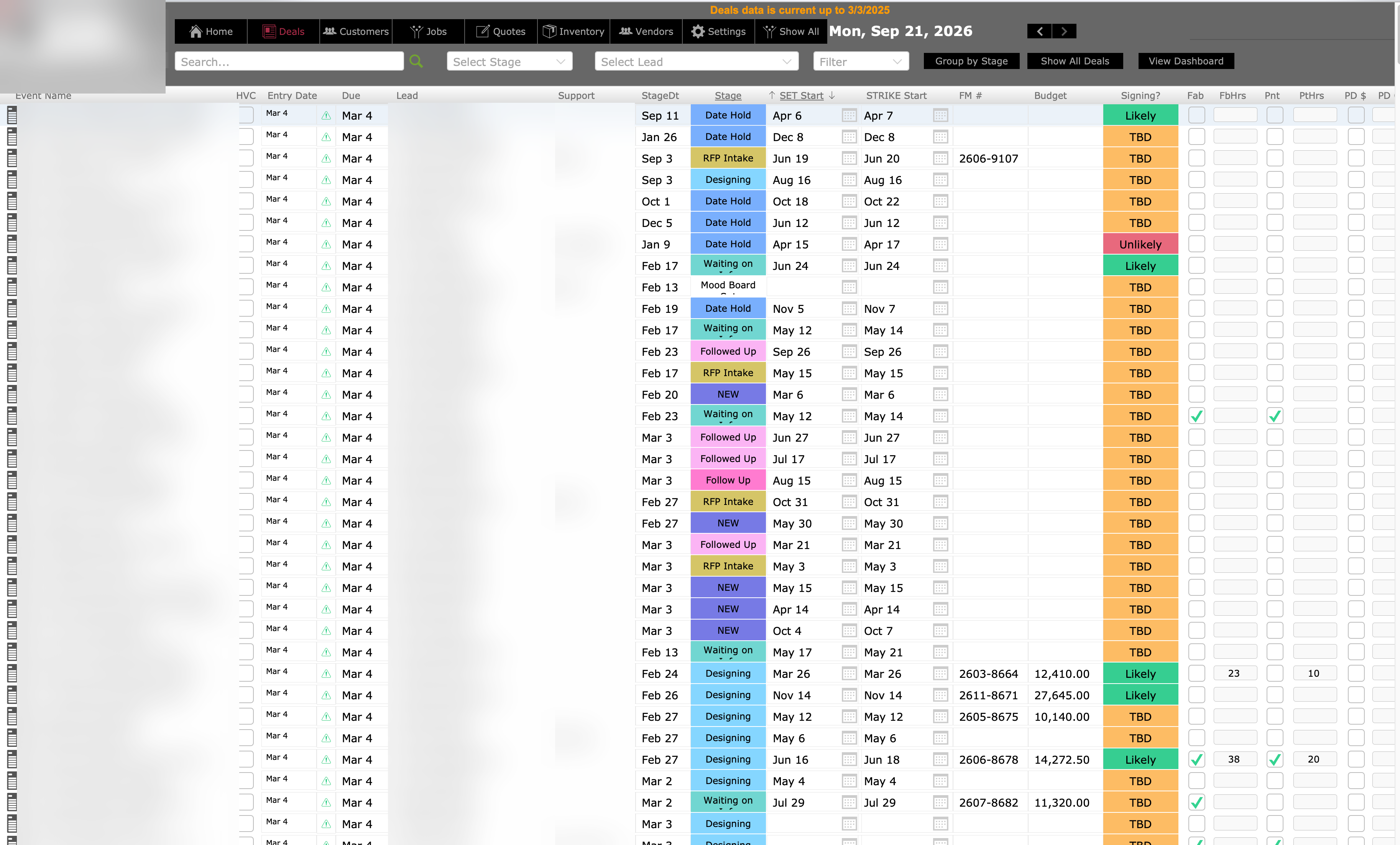
An event production company had a screen like this. They'd already gone outside FileMaker for it — bought a subscription tool, paid monthly, and ended up entering the same information twice, once in each system. Nobody liked it, but it worked and it was fast.
We rebuilt the function in FileMaker. It was too slow to use. Not a little slow — unusable for the volume they had.
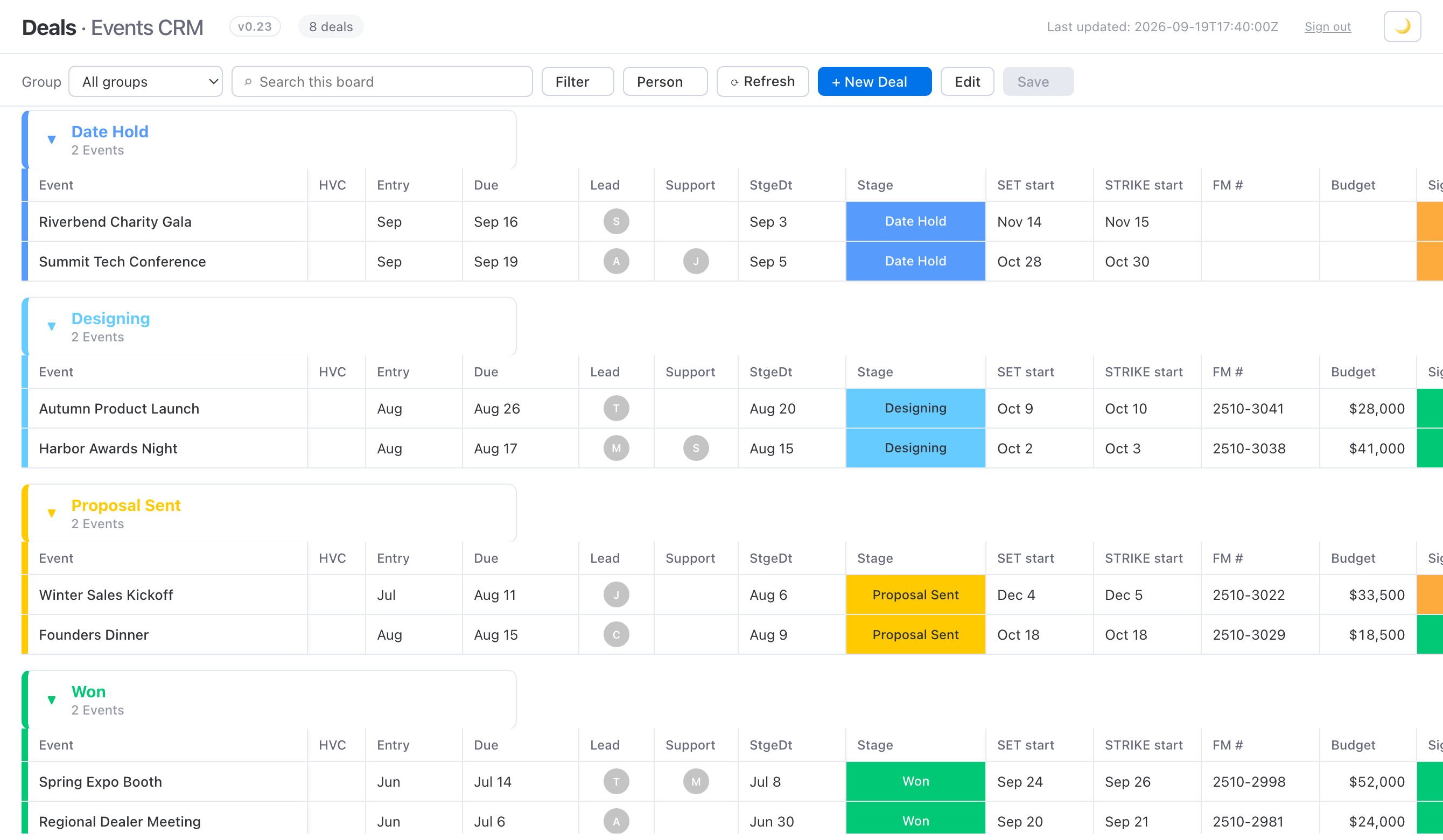
So we rebuilt that one screen as a standalone page instead. About two weeks of work, data cleanup included. It's live now: fast on a phone, fast on a laptop, no double entry, and the subscription has nothing left to do.
The cost nobody adds up.
Everyone knows their FileMaker license cost. Almost nobody knows the total of everything orbiting it.
There's usually a scheduling tool, a forms tool, a reporting tool, a shared spreadsheet somebody pays for, maybe a project board. Each one arrived because FileMaker couldn't do one specific thing on one specific day. Each one is another monthly subscription. I've worked with businesses that keep a separate credit card just for software subscriptions, and the monthly number runs into four figures without anyone ever having decided to spend it.
Some of those tools are genuinely worth keeping. But some exist purely to work around a screen that's slow, and those are the ones worth a hard look.
What you get back.
No new license, for anyone. The page opens in a browser, so the warehouse, the drivers, and the part-time staff can all see it without a FileMaker license. Works on a phone, with no app to install.
And FileMaker is untouched. The original layout is still sitting there — nothing was removed.
What it takes.
Rebuilding a single heavy screen usually takes one to two weeks, depending on how much logic lives behind it.
You cancel the subscription, and stop paying to do double entry.