 FileMakerCoder
Most don't. They get built, demoed, admired for a week, and then quietly abandoned — because they answer questions nobody had.
The ones that stick have something in common: they answer a question someone was already asking out loud.
Four that stayed in use.
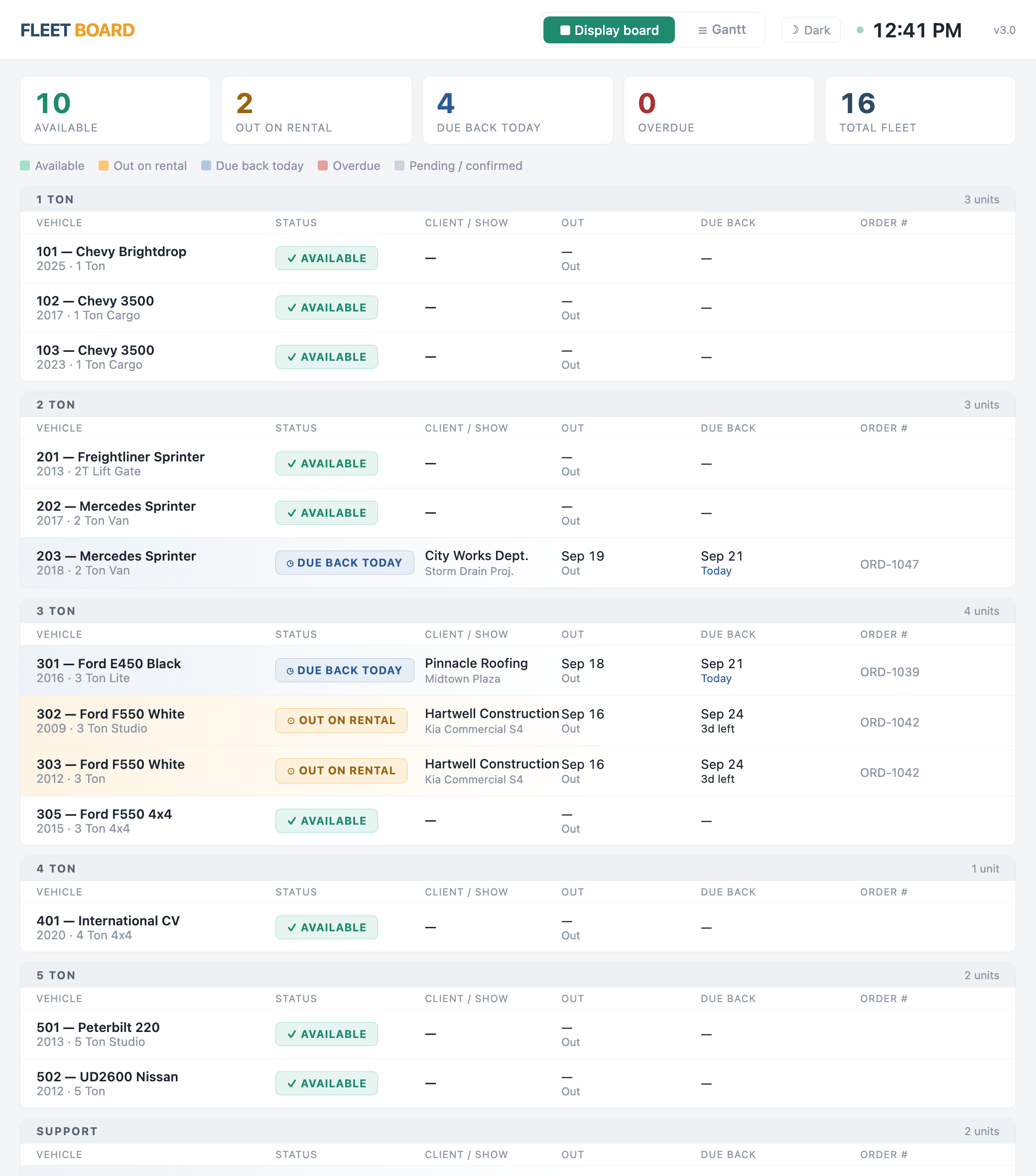
A fleet board. A Hollywood lighting rental company runs a display in the shop showing where every truck is and what's on it. It went live in September 2026 and nobody's turned it off, because the alternative was walking out to the yard or calling a driver.
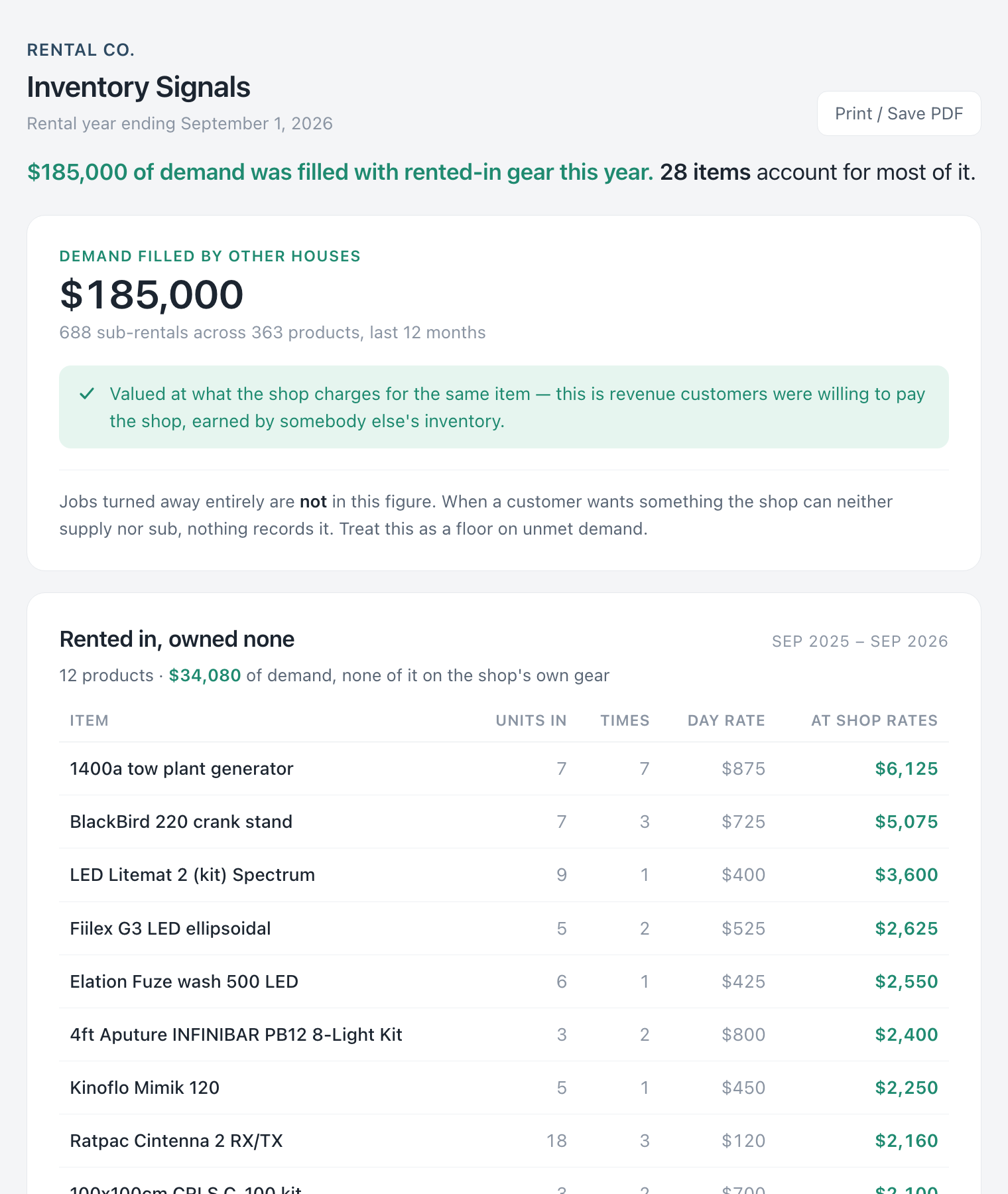
What to buy, what to sell. The same company gets a page ranking what to buy and what to sell, built from rental history against what's actually owned. Not a report anyone reads cover to cover — a list you check before writing a purchase order.
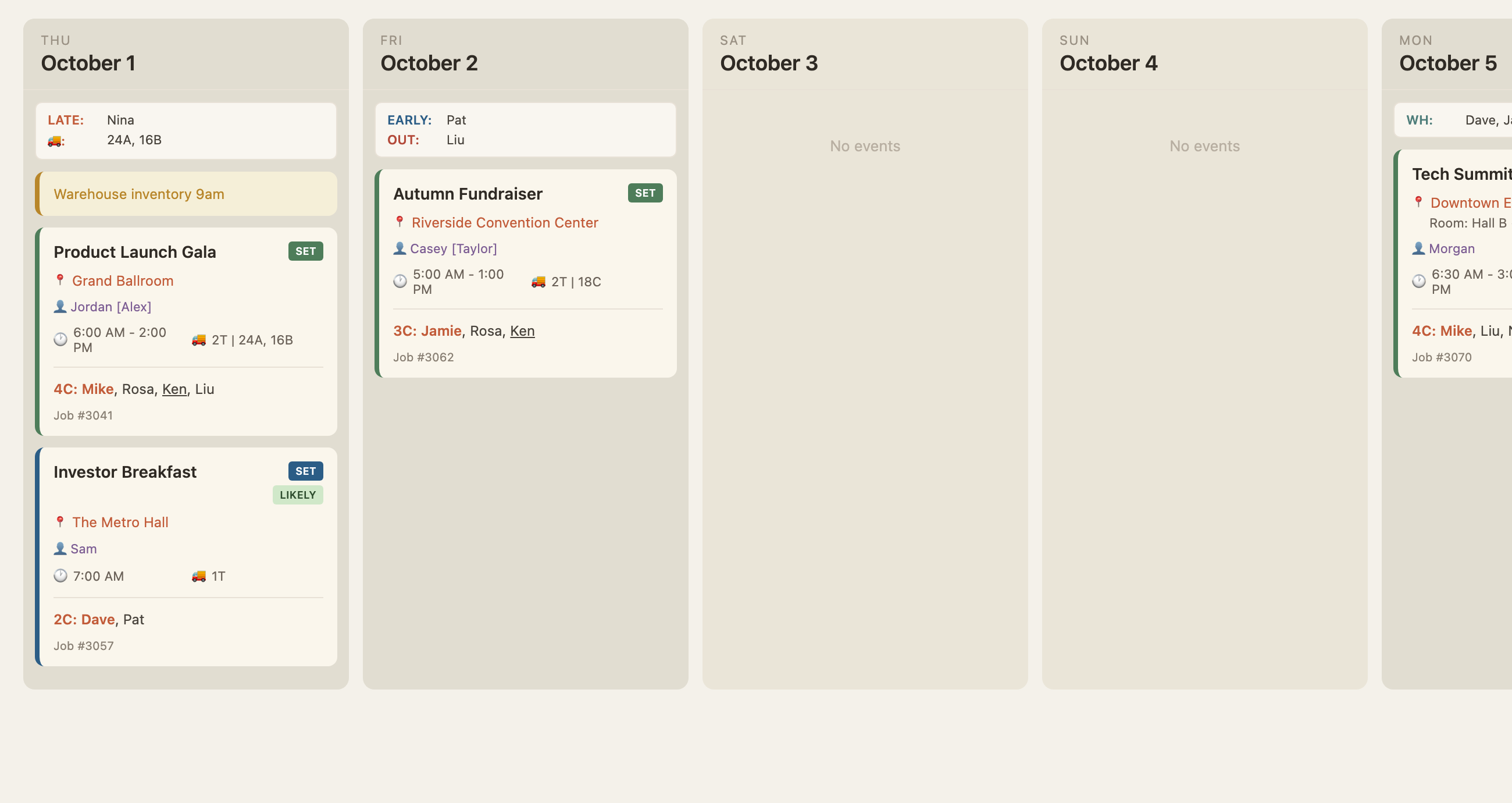
A crew scheduler. An event production company assigns crew to jobs in FileMaker, and each crew member reads their next assignment from their phone — at home Sunday night, or in the parking lot Monday morning. Before this, the same information lived in a shared spreadsheet: everyone typing into it, everyone mis-clicking rows, and the wrong people occasionally showing up at the wrong warehouse. The new version pulls from FileMaker directly. One place to update, one place to read. The spreadsheet is gone.
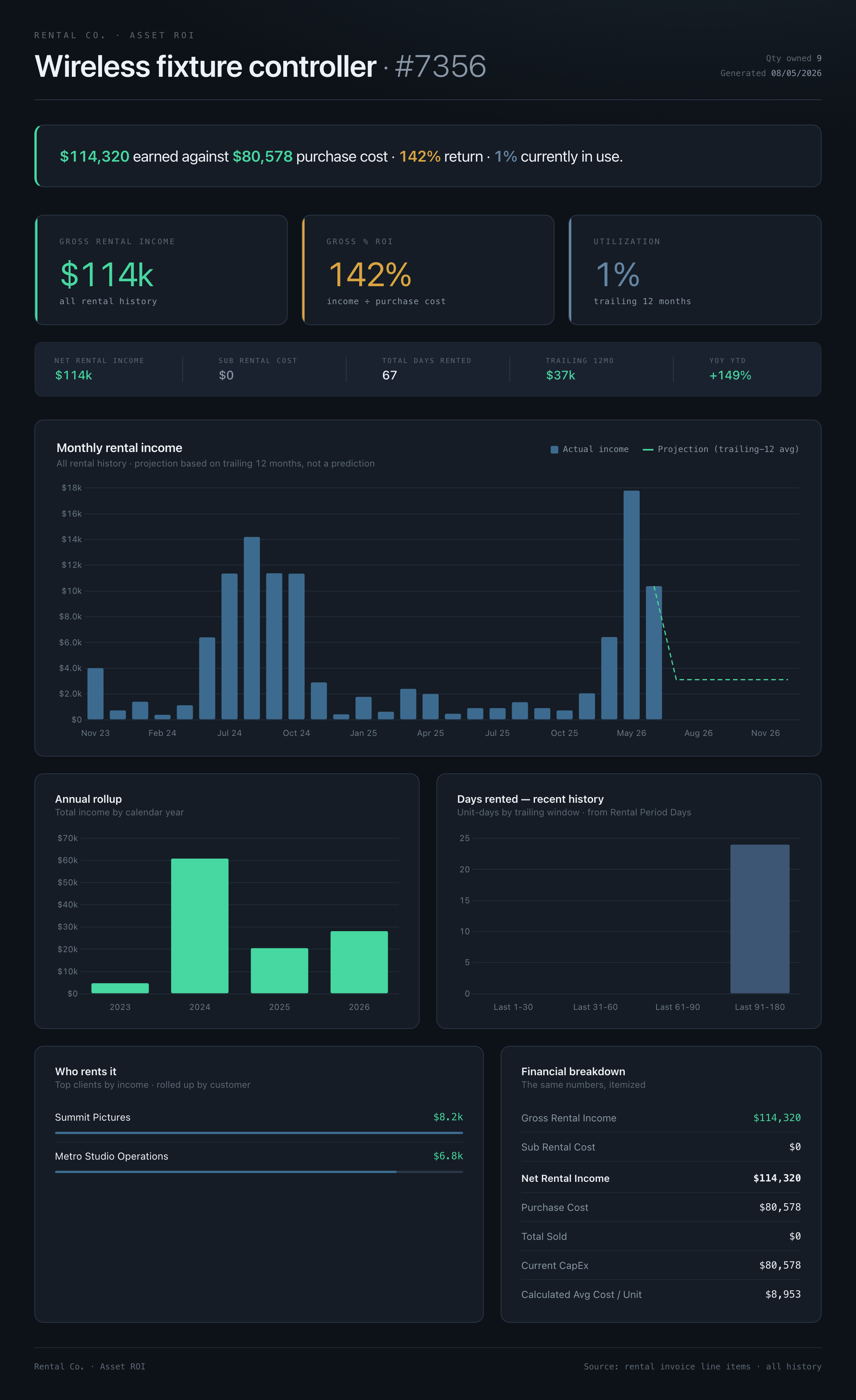
Is each item paying for itself? The same lighting company gets a per-item return sheet: what each piece of gear has earned against what it cost, how it's rented over its life, and who rents it. It's the number behind every "should we buy another of these" — and the one that quietly flags the gear that's stopped earning and is worth selling.
All four answer a question that was being asked anyway. That's the test.
The question that decides it.
Before I build one, I ask: who looks at this, and what do they do differently after looking?
If the answer is vague — "management would like visibility" — it's a status report wearing a dashboard costume, and it'll be dead in a month. If the answer is specific — "the shop foreman checks before promising a delivery window" — it'll still be running in three years.
What's underneath.
Built the same way as everything else here. FileMaker holds the data. On a schedule it sends a snapshot out, and a plain web page shows it, fast, on anything with a browser — a phone in the yard, a TV on the shop wall, a laptop at home on Sunday night.
Nobody needs a FileMaker license, a special connection to the office, or an app to look at it. The license part matters more than it sounds: the people who most need to see the number are usually the ones without a FileMaker license. Details on the underlying pattern are on the how it works page.
What it costs.
The build depends on how much calculation sits behind it and is priced in the System Assessment's quote. Running cost is minimal: it runs on cloud services billed to your own account, and normal traffic usually stays inside their free tiers.
If you want three of them, we build one and live with it for a month first. The second one is always better for having waited.